Diabetes can affect the tissues that surround and support the teeth.
Periodontal disease may be more common and tends to be more severe in people with diabetes, particularly when glycemic management is poor. Periodontal inflammation may also be associated with glycemic outcomes.
This does not mean that diabetes inevitably leads to gum disease or that gum disease simply causes diabetes.
The relationship makes more sense when two concepts are kept separate: gingivitis and periodontitis are related, but they are not the same condition.
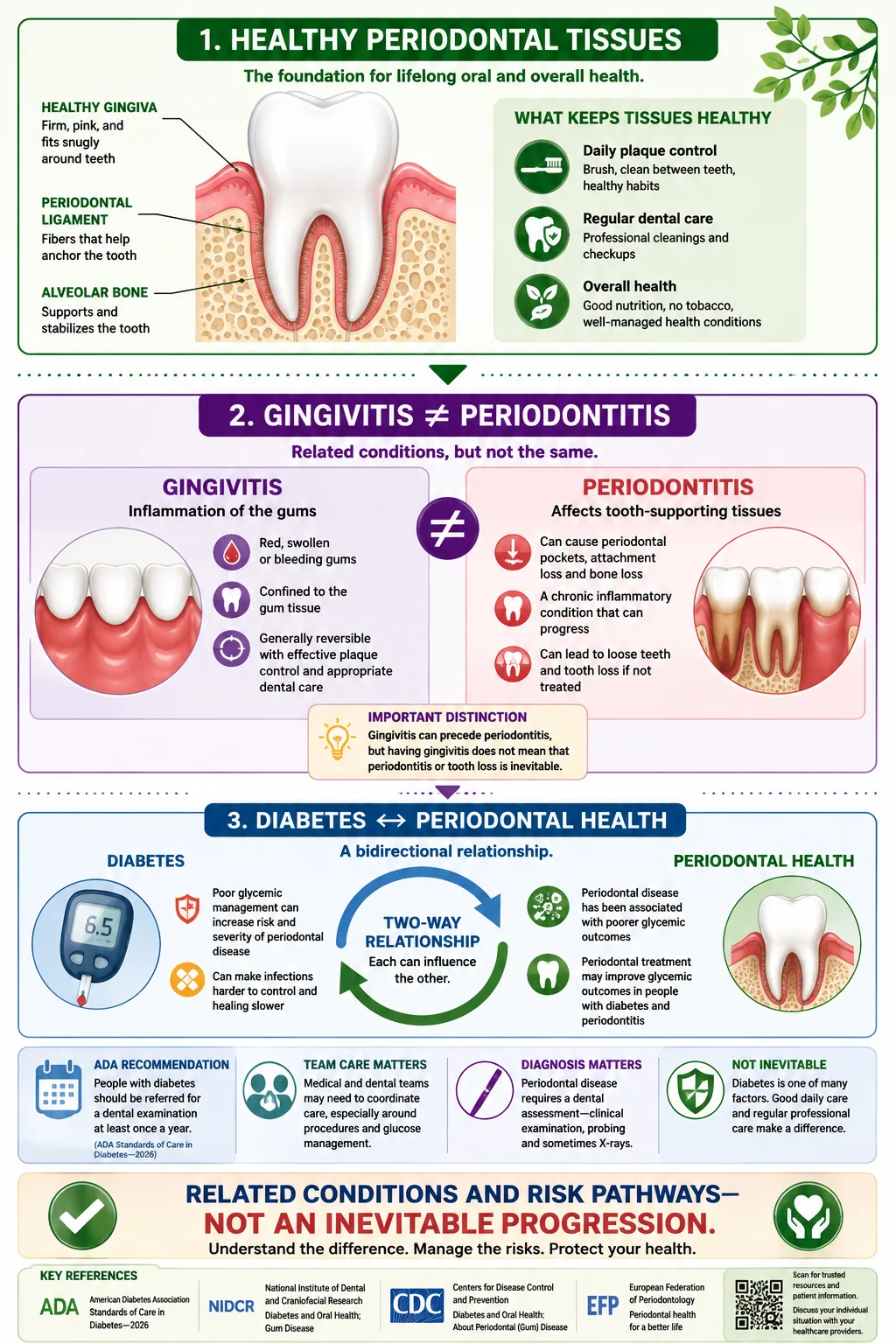
What Keeps Gums and Supporting Tissues Healthy?
The visible gum tissue around the teeth is called the gingiva. Together with the structures that anchor and support the teeth, including the surrounding alveolar bone, it forms part of the periodontium.
Dental plaque continually forms on teeth and around the gumline. When plaque accumulates, the tissues around the teeth can become inflamed.
That inflammation does not always mean the same thing clinically.
What Is the Difference Between Gingivitis and Periodontitis?
Gingivitis
Gingivitis is inflammation of the gums. The gums may become red, swollen or bleed more easily.
At this stage, the inflammation is confined to the gingival tissues without the attachment and bone loss that characterize periodontitis.
Gingivitis is generally reversible with effective plaque control and appropriate dental care.
Periodontitis
Periodontitis is a chronic inflammatory condition that damages the tissues supporting the teeth and can involve attachment and bone loss.
Periodontal pockets can develop, and more advanced disease can loosen teeth and eventually contribute to tooth loss.
Gingivitis can precede periodontitis, but having gingivitis does not mean that periodontitis or tooth loss is inevitable.
Why Are Diabetes and Periodontal Disease Connected?
Diabetes can influence periodontal health through several overlapping factors.
Poor glycemic management can make infections harder to control and healing slower. Periodontal disease itself involves inflammation in the tissues surrounding and supporting the teeth.
These factors help explain why periodontal disease tends to be more severe in people whose diabetes is not well managed.
But diabetes is only one part of periodontal risk. Smoking, plaque control, age and other health factors also matter.
Someone without diabetes can develop periodontitis, and having diabetes does not mean that a person will develop it.
Does Blood Glucose Management Matter for Gum Health?
Yes, but blood glucose does not diagnose periodontal disease.
Poorer glycemic management is associated with greater periodontal risk and severity, and periodontal disease has been associated with higher A1C levels.
An A1C test reflects average blood glucose over time. It does not show whether someone has gingivitis or periodontitis.
Periodontal disease requires a dental assessment.
Can Gum Disease Affect Blood Glucose?
Evidence supports a two-way relationship between diabetes and periodontal health.
Diabetes, particularly when glycemic management is poor, can adversely affect periodontal health. Periodontal disease, in turn, has been associated with poorer glycemic outcomes.
That relationship is clinically important, but it should not be reduced to a simple claim that gum disease causes diabetes.
Can Periodontal Treatment Improve A1C?
Periodontal treatment may improve glycemic outcomes in people with diabetes and periodontitis.
That does not make periodontal treatment a treatment for diabetes.
Its primary purpose is to manage periodontal disease. Diabetes still requires appropriate medical care and individualized glucose management.
The relationship can work in both directions without meaning that one condition inevitably produces the other.
What Are the Signs of Gum Disease?
Possible signs include:
- red, swollen or bleeding gums;
- gums pulling away from the teeth;
- persistent bad breath;
- discomfort when chewing;
- loose teeth.
Some periodontal disease can be present without obvious symptoms.
These signs do not establish a diagnosis by themselves. A dental professional needs to evaluate the gums and supporting tissues.
How Is Periodontal Disease Evaluated?
A dentist or periodontist can examine the gums, review relevant medical history and assess the tissues supporting the teeth.
A periodontal probe may be used to measure the spaces around the teeth. These measurements are interpreted with other clinical findings rather than used alone.
Dental X-rays can help identify changes in the bone supporting the teeth.
For people with diabetes, telling the dental team about diabetes, medications and relevant glucose-management concerns helps place the findings and treatment plan in the appropriate clinical context.
How Often Should People With Diabetes Have a Dental Examination?
Current American Diabetes Association guidance recommends that people with diabetes be referred for a dental examination at least once a year.
Some people may need more frequent dental or periodontal care depending on existing disease and individual risk.
Medical and dental teams may also need to coordinate care around certain dental procedures, particularly when glucose management or medications require special consideration.
Medication changes should be made with the appropriate healthcare professional rather than independently.
The Bigger Picture: Diabetes and Periodontal Health
Inflammation affecting the gums without the attachment and bone loss that define periodontitis.
PERIODONTITIS
A chronic inflammatory condition that damages the tissues supporting the teeth and can involve attachment and bone loss.
DIABETES ↔ PERIODONTAL HEALTH
Diabetes can influence periodontal risk and severity, while periodontal disease may also be associated with glycemic outcomes.
GINGIVITIS ≠ PERIODONTITIS
These are related conditions and risk pathways — not an inevitable progression.
For someone with diabetes, periodontal health is one part of comprehensive health care and is best assessed with appropriate dental and medical professionals.
Sources & Medical References
- American Diabetes Association — Standards of Care in Diabetes—2026: Comprehensive Medical Evaluation and Assessment of Comorbidities
- NIDCR — Diabetes and Oral Health
- NIDCR — Gum Disease
- CDC — Diabetes and Oral Health
- CDC — About Periodontal (Gum) Disease
- European Federation of Periodontology — What Is Periodontitis?
Published: September 2, 2026 · Last reviewed: September 2, 2026