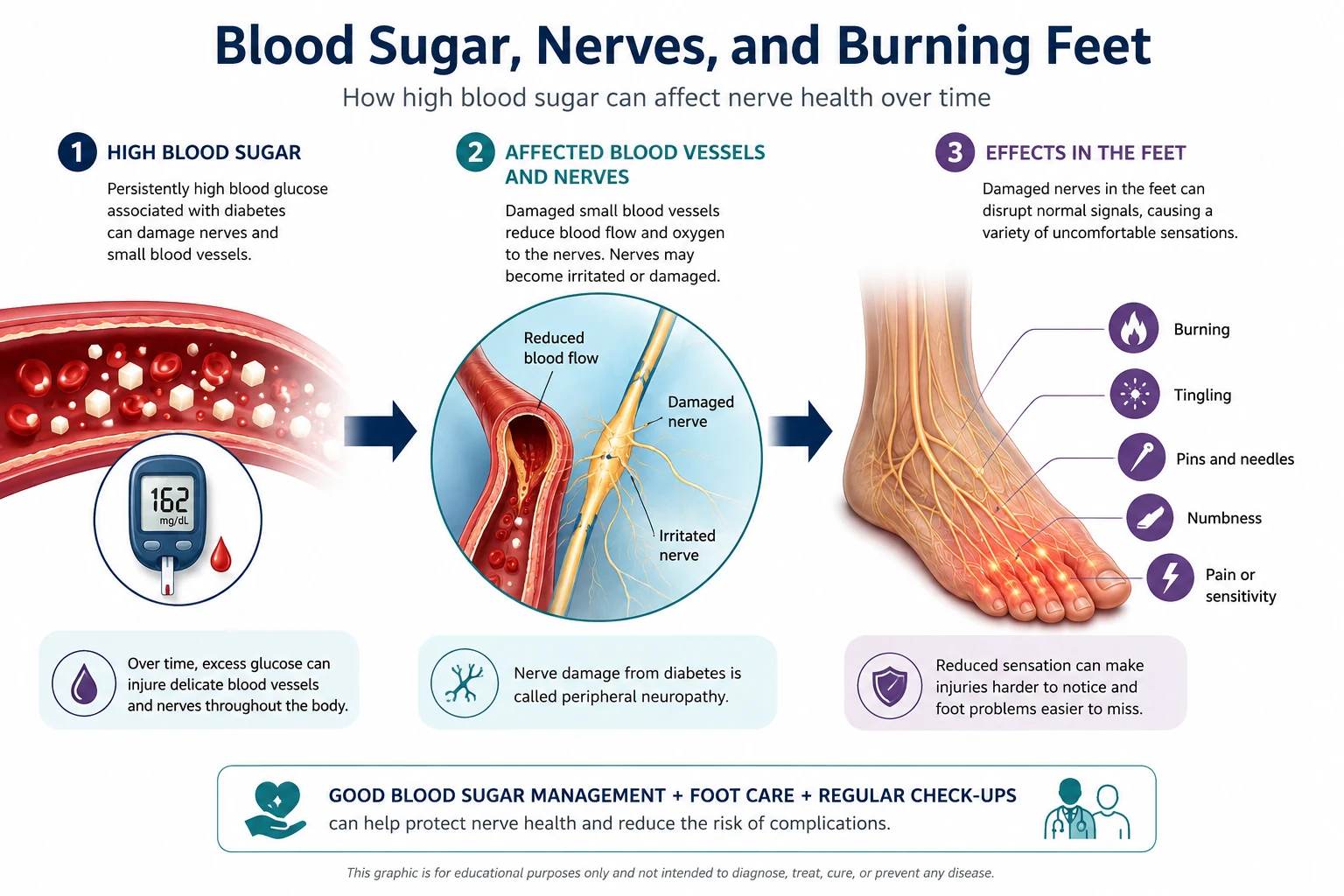
Can high blood sugar cause burning feet? It can be part of the picture. Over time, high blood glucose associated with diabetes can damage nerves and the small blood vessels that supply them. When peripheral nerves are affected, some people experience burning, tingling, numbness, pain, or “pins and needles,” particularly in the feet.
But burning feet do not automatically mean that your blood sugar is high or that you have diabetes. Similar sensations can have several possible causes, which is why the pattern, duration, other symptoms, and your overall health history matter.

How Can High Blood Sugar Affect Your Nerves?
Your nerves form a communication network between your brain and the rest of your body. They help you sense touch, temperature, pain, and other changes around you.
Over time, persistently high blood glucose associated with diabetes can affect this network. High blood glucose can damage nerves as well as the small blood vessels that provide them with oxygen and nutrients.
The Connection Between Blood Sugar and Nerve Health
Nerve damage caused by diabetes is known as diabetic neuropathy. Different types of neuropathy can occur depending on which nerves are affected.
For this topic, peripheral neuropathy is particularly relevant. It typically affects the feet and legs and may also involve the hands and arms.
This type of damage generally develops over time rather than being the result of one temporary rise in blood sugar.
Why the Feet May Be Affected First
Peripheral neuropathy typically affects the feet and legs. Depending on which nerves are affected, a person may experience burning, tingling, pain, weakness, numbness, unusual sensitivity, or difficulty sensing temperature.
Reduced sensation is particularly important because a blister, cut, or other injury can become harder to notice. Diabetes may also affect blood flow to the feet, adding another reason why foot health receives special attention in diabetes care.
To learn more about the broader effects of diabetes on the feet, including changes in sensation, circulation, healing and everyday foot care, see our guide to diabetes and foot problems.
What Can Burning Feet Feel Like?
Burning feet can feel different from one person to another. Some people describe warmth or a hot sensation, while others notice tingling, “pins and needles,” numbness, sensitivity, or pain.
Burning, Warmth, and Unusual Sensations
A burning sensation does not necessarily mean that the skin itself is unusually hot. Changes in nerve sensation can be experienced as burning, pain, or unusual sensitivity.
For some people these sensations may be mild; for others they may interfere with rest, sleep, or daily activities. The sensation itself, however, does not identify its cause.
Tingling, Pins and Needles, and Numbness
Burning is only one possible change in sensation. Tingling or a “pins and needles” feeling may occur alongside burning. Others experience numbness or reduced sensation.
Peripheral neuropathy can therefore produce both uncomfortable sensations and a decreased ability to perceive pain or temperature.
Why Symptoms May Feel More Noticeable at Night
Nighttime is a recognized pattern in peripheral neuropathy. Symptoms may become more noticeable or feel worse at night.
That does not establish why a particular person's feet burn at night, but it does make nighttime burning, tingling, pain, or pins-and-needles sensations relevant when considering a broader symptom pattern.
Can High Blood Sugar Cause Burning Feet?
Yes, there can be a connection — particularly when persistently high blood glucose associated with diabetes contributes to peripheral nerve damage.
When peripheral nerves are affected, burning, tingling, numbness, pain, or pins-and-needles sensations can occur in the feet.
How Diabetic Peripheral Neuropathy Can Affect the Feet
Diabetes-related peripheral neuropathy can develop gradually. When sensory nerves are affected, the signals between the feet and brain may change.
One person may experience pain or extreme sensitivity, while another may develop numbness or difficulty detecting temperature. These experiences can even occur together in different areas.
Why One Symptom Alone Cannot Identify the Cause
Burning feet are a symptom, not a diagnosis.
A useful way to understand the possible relationship is:
Persistently high blood glucose associated with diabetes → possible nerve and small-vessel damage → peripheral nerve changes → burning, tingling, numbness, or pain may occur.
The final symptom alone, however, does not establish what caused it.
Does Burning or Tingling in Your Feet Mean You Have Diabetes?
No — not necessarily.
Diabetes is one possible cause of peripheral nerve damage, but burning or tingling sensations should be treated as clues requiring context rather than as a diagnosis by themselves.
Other Possible Causes
Peripheral neuropathy can have causes other than diabetes. Evaluation may include medical history, examination and, when appropriate, tests looking for other explanations such as thyroid problems, kidney disease, or low vitamin B12 levels.
Why Proper Evaluation Matters
A healthcare professional may consider when the sensation began, whether one or both feet are involved, whether symptoms are changing, and whether numbness, weakness, other health conditions, or medications could be relevant.
The goal is not simply to label the sensation, but to understand what may be causing it.
Burning Feet at Night and Blood Sugar: Is There a Connection?
If your feet seem to burn, tingle, or feel unusually sensitive when you settle into bed, it is understandable to wonder whether blood sugar could be involved.
Diabetes-related peripheral neuropathy is one possible explanation for burning or tingling sensations, and symptoms of peripheral neuropathy may be worse at night. But nighttime burning by itself does not mean that blood sugar is the cause.
When Nighttime Symptoms Interfere With Sleep
A recurring pattern that becomes painful, persistent, or disruptive deserves more attention than an occasional unusual sensation.
When Should You Talk to a Healthcare Professional?
Burning, tingling, or numbness in the feet can have different causes. If these sensations are persistent, worsening, or interfering with sleep or daily activities, a healthcare professional can help determine what may be contributing to them.
For people with diabetes, changes such as tingling, burning, pain, loss of sensation, difficulty feeling heat or cold, changes in foot color or temperature, sores, or blisters deserve particular attention.
Why Regular Foot Checks Matter
Nerve damage can sometimes reduce sensation rather than cause pain. As a result, a small cut, blister, sore, or other injury may go unnoticed.
In other words, “it doesn't hurt” does not always mean “nothing is wrong.”
Supporting Blood Sugar, Nerve and Foot Health
When blood sugar and nerve health are part of the picture, focusing only on one sensation such as burning or tingling misses the broader context.
Everyday Health Habits
Healthy eating, appropriate physical activity, avoiding tobacco, taking prescribed medicines as directed, and working toward individualized blood glucose targets can all form part of diabetes management.
There is no single lifestyle habit that should be presented as a quick fix for burning feet.
Foot Care and Monitoring Changes
People with diabetes are commonly advised to check their feet regularly for changes such as cuts, redness, swelling, sores, or blisters, and to take steps that reduce the chance of unnoticed injuries.

Working With a Healthcare Professional
Blood sugar targets and diabetes management are individual. Regular healthcare visits and foot examinations can help identify changes in sensation, blood flow, skin, or other aspects of foot health before a small problem becomes more serious.
The Bigger Picture: Metabolic Health and Your Nerves
Burning or tingling feet may be what first draws someone's attention to nerve health, but nerves do not function in isolation.
Blood vessels, metabolic health, and nerve function are interconnected. In diabetes, different types of nerve damage may affect different systems of the body.
For example, autonomic nerve changes can involve functions related to heart rate and blood pressure, digestion, bladder function, sexual function, sweating, and the eyes.
This does not mean that a symptom in one area predicts a problem somewhere else. It simply illustrates why metabolic and nerve health form part of a larger physiological picture.
Conclusion
Burning feet can have different possible causes, and high blood sugar is only one part of the picture.
In diabetes, persistently high blood glucose can contribute to nerve damage, and peripheral neuropathy can produce burning, tingling, numbness, pain, or pins-and-needles sensations in the feet.
But a burning sensation alone cannot tell you whether your blood sugar is high or whether diabetes is the cause.
Understanding the pattern, paying attention to changes in sensation, and discussing persistent or concerning symptoms with a healthcare professional provides a more useful approach than trying to identify the cause from a single symptom.
Looking at blood sugar, nerve health, blood vessels, foot health, and overall metabolic health together provides a broader picture.
Key Takeaways
- Persistently high blood glucose associated with diabetes can affect nerve health over time.
- Peripheral neuropathy commonly involves the feet and legs and may cause burning, tingling, pins and needles, numbness, pain, or weakness.
- Burning feet do not automatically mean diabetes. A symptom alone cannot establish its cause.
- Changes in sensation matter. Reduced ability to feel pain, heat, or cold can make foot injuries easier to overlook.
- Persistent or concerning foot changes deserve professional evaluation, particularly for people with diabetes.
- Daily foot care and regular examinations are important parts of diabetes-related foot care.
Sources & Medical References
This article was developed using information from established U.S. medical and public-health resources.
- National Institute of Diabetes and Digestive and Kidney Diseases (NIDDK) — Peripheral Neuropathy
- NIDDK — What Is Diabetic Neuropathy?
- NIDDK — Diabetes & Foot Problems
- Centers for Disease Control and Prevention (CDC) — Your Feet and Diabetes
Reviewed for informational accuracy using sources from NIDDK/NIH and CDC.
Last updated: August 28, 2026