Diabetes can affect your feet in more than one way. Changes in the nerves may alter how well you feel pain, pressure, heat or an injury. At the same time, problems with blood flow can make it harder for damaged tissue to heal.
That is why diabetic foot health involves more than burning, tingling or numbness. Sometimes the more important issue is what you don't feel: a small blister, a cut or an irritated area that might otherwise have caused enough discomfort to get your attention.
Knowing what to look for can help you protect your feet and recognize when a change deserves professional evaluation.
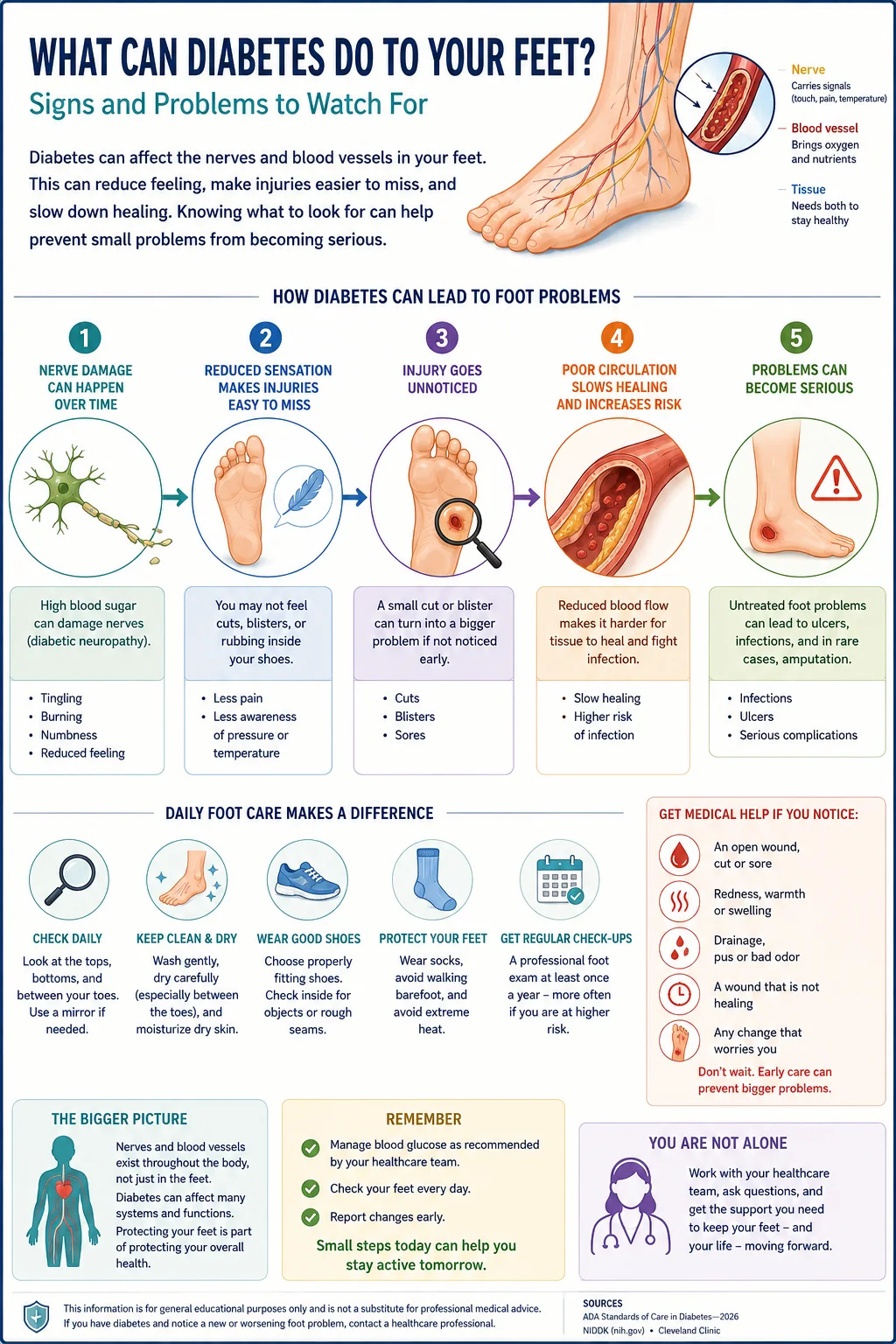
How Can Diabetes Affect Your Feet?
Two systems are especially important to foot health: the nerves that provide sensation and the blood vessels that supply the tissues.
Over time, diabetes can damage nerves, a complication known as diabetic neuropathy. When nerves in the feet are affected, sensation may become unusual or gradually decrease.
Diabetes is also associated with an increased risk of peripheral artery disease (PAD), which can reduce blood flow to the legs and feet.
When reduced sensation and circulation problems occur together, a seemingly minor foot problem may require more attention.
Nerves and sensation
Peripheral nerves help you recognize touch, pressure, temperature and pain.
Nerve damage can cause burning, tingling, pain or numbness. In some people, however, the more significant change is a gradual loss of protective sensation.
Blood flow and circulation
Blood carries oxygen and nutrients to the tissues and plays an essential role in healing.
When circulation to the feet is reduced, a wound may take longer to heal. Reduced blood flow can become particularly important when a person also has decreased sensation and doesn't immediately notice an injury.
When Your Feet Don't Feel Things the Same Way
Loss of sensation can develop gradually. Someone may still feel their feet while becoming less aware of pressure, temperature or a small injury.
Because pain normally acts as a warning signal, even a partial loss of protective sensation can matter.
Reduced feeling or numbness
Imagine developing a small blister while walking.
Normally, pain or irritation tells you that something is rubbing against the skin. If sensation has been reduced, that warning may be much weaker.
The person may continue walking without realizing that repeated pressure or friction is making the area worse.
Temperature may be harder to judge
Nerve damage can affect temperature sensation as well.
Hot water, heating pads and other direct heat sources can potentially injure skin when someone cannot accurately judge how hot something is.
Pressure and friction from shoes
Poorly fitting shoes can create repeated rubbing or concentrated pressure.
Without normal sensation, discomfort may not provide an early enough warning. Appropriate footwear therefore becomes more than a matter of comfort—it is part of protecting the skin from avoidable injury.
Why Can a Small Foot Injury Become a Bigger Concern?
Most small cuts and blisters don't automatically become serious problems.
With diabetes, however, two things can sometimes work against each other: reduced sensation may make an injury easier to miss, while reduced circulation can make healing more difficult.
Cuts and blisters can go unnoticed
A blister, scratch or small area of broken skin may not cause much pain when protective sensation has been reduced.
Regularly looking at the feet helps compensate for a warning system that may no longer be as reliable as it once was.
Circulation matters for healing
Healing depends on adequate blood supply.
When circulation is impaired, tissues may receive less of what they need for repair. This can make some wounds slower to heal and can complicate the body's response to infection.
Infection needs attention
Broken skin can provide an entry point for bacteria.
Increasing redness, swelling, warmth, drainage or other concerning changes around a wound deserve attention, especially when the area isn't healing as expected.
Foot Changes Worth Paying Attention To
There is no single appearance of a “diabetic foot,” and a change in your feet does not by itself diagnose neuropathy, poor circulation or another diabetes-related complication.
The useful habit is simpler: become familiar with what is normal for your feet so that something new is easier to spot.
Skin changes
Look for unusually dry or cracked skin, persistent redness and areas whose color looks noticeably different from the surrounding skin. For a broader overview, see our guide to diabetes and skin problems .
Cracks in the skin are worth noticing because they can create an opening for irritation or infection.
Swelling, warmth or color changes
Swelling, unusual warmth and changes in skin color can have many causes.
They shouldn't be used for self-diagnosis, but new or unexplained changes warrant attention.
Blisters, cuts and sores
Look for cuts, scratches, blisters, sores or other breaks in the skin, including areas that are difficult to see during normal daily activities.
A wound does not have to hurt to matter.
Nails, calluses and changes in foot shape
Changes involving the toenails, calluses or foot structure can alter how pressure is distributed while standing and walking.
Areas exposed to repeated pressure may require different footwear or assessment by an appropriate foot-care professional.
Why Do Daily Foot Checks Matter?
When pain cannot always be relied on as an early warning, your eyes become another line of defense.
A daily check doesn't need to be complicated.
- Look at the tops and bottoms of both feet and between the toes.
- Watch for cuts, blisters, redness, swelling, cracked skin, sores, drainage or unusual color changes.
- If seeing the soles is difficult, an unbreakable mirror—or help from another person—can make inspection easier.
- Check inside shoes for small objects, rough seams or damaged areas that could irritate the skin.
The goal isn't to become anxious about every mark on your feet. It's to notice changes early enough to respond appropriately.
When Should You Contact a Healthcare Professional?
Don't rely only on pain when deciding whether a foot problem deserves attention.
Seek appropriate medical care rather than trying to diagnose or treat a potentially serious foot problem on your own.
Keeping Your Feet Healthy When You Have Diabetes
Foot care is not only about reacting after a problem appears.
Managing diabetes, protecting the skin, wearing appropriate footwear, checking the feet regularly and having them examined by a healthcare professional can all contribute to prevention.
Blood glucose management matters
Managing blood glucose within the individualized target established with your healthcare team can help reduce the risk or progression of diabetes-related complications.
Our article Can High Blood Sugar Cause Burning Feet? Understanding the Nerve Connection explains the blood-glucose and nerve relationship in greater detail rather than repeating it here.
Regular professional foot examinations matter
Current American Diabetes Association guidance recommends a comprehensive foot evaluation at least once a year for people with diabetes.
People with sensory loss, previous ulcers, amputation, peripheral artery disease or other risk factors may need their feet assessed more frequently.
A professional foot examination can evaluate things that are difficult to assess at home, including protective sensation, circulation and structural changes.
Everyday habits matter too
Daily inspection, appropriate skin care, properly fitting footwear and responding to injuries rather than ignoring them are straightforward habits with an important purpose.
They help identify small problems while they are still small.
Diabetes Can Affect More Than Your Feet
The nerves and blood vessels involved in diabetic foot problems are not unique to the feet.
Nerves carry signals throughout the body, and blood vessels supply every organ and tissue. Diabetes-related nerve and vascular changes can therefore have effects in other parts of the body and influence other body functions.
That makes foot health part of a larger picture. Understanding what happens in the feet can also help explain why protecting nerve and blood-vessel health matters throughout the body.
Another example of this connection can be seen in sexual health, where nerve signaling and blood flow both matter. Learn more about diabetes and erectile dysfunction.
Sources & Medical References
This article was developed using established medical and public-health sources.
- American Diabetes Association — Standards of Care in Diabetes—2026: Retinopathy, Neuropathy, and Foot Care
- NIDDK — Diabetes & Foot Problems
- NIDDK — Peripheral Neuropathy
- Cleveland Clinic — Diabetes-Related Foot Conditions
Published: August 30, 2026 · Last reviewed: August 30, 2026