Dry mouth can be uncomfortable and sometimes persistent. For people with diabetes, it may also raise a natural question: is diabetes responsible for the dryness?
Dry mouth has many possible causes. It is reported in people with diabetes, but medications, dehydration and other health conditions can also contribute.
Understanding what dry mouth means—and how it differs from reduced saliva production—can help put the symptom in context.
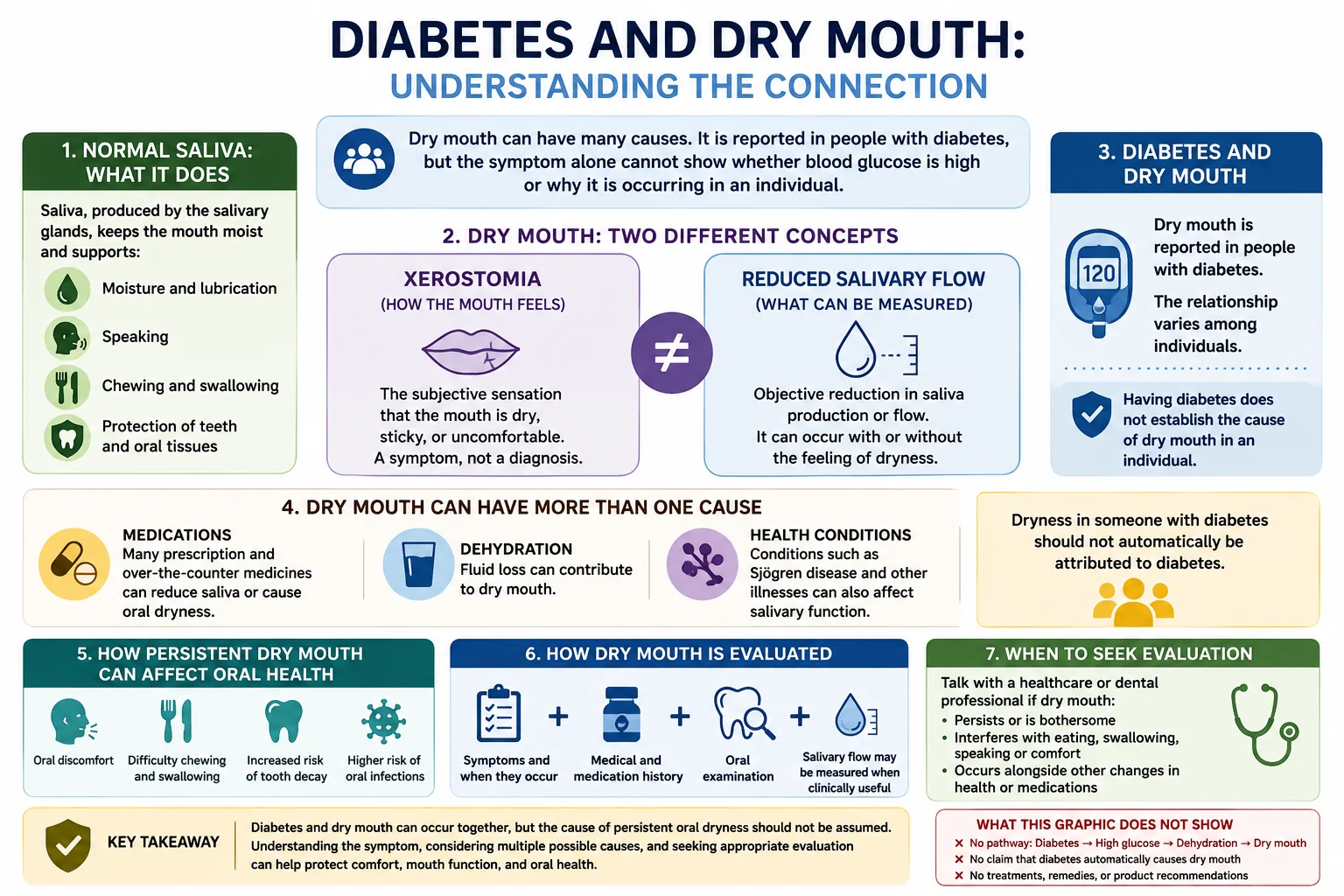
What Does Saliva Normally Do?
Saliva does more than keep the mouth moist. Produced by the salivary glands, it helps with speaking, chewing and swallowing and contributes to the protection of teeth and oral tissues.
Changes in saliva can therefore affect both comfort and everyday mouth function.
What Is Dry Mouth, or Xerostomia?
Xerostomia is the medical term for the subjective feeling of a dry mouth.
People may describe the mouth as dry, sticky or uncomfortable. When dryness persists, speaking, chewing or swallowing may become more difficult.
Dry mouth is a symptom, not a diagnosis.
Xerostomia and Reduced Salivary Flow Are Different
Xerostomia describes what a person feels.
Hyposalivation refers to objectively reduced salivary flow.
The two can occur together, but they are not interchangeable. A person can experience dry mouth without necessarily having an objectively measured reduction in salivary flow.
This distinction becomes useful when persistent dryness is clinically evaluated.
What Is the Connection Between Diabetes and Dry Mouth?
Dry mouth is reported in people with diabetes.
The relationship, however, varies among individuals. Not everyone with diabetes experiences dry mouth, and the symptom alone cannot show whether blood glucose is high.
Dry Mouth Can Have More Than One Cause
Medications are an important cause of dry mouth. Dehydration and health conditions such as Sjögren disease can also contribute.
Other illnesses and medical treatments may affect oral moisture or salivary function as well.
This is why the broader clinical context matters when persistent dryness develops.
How Can Persistent Dry Mouth Affect Oral Health?
Persistent dry mouth can affect both comfort and function.
Speaking may become uncomfortable, while chewing or swallowing certain foods can become more difficult.
Saliva also helps protect teeth and oral tissues. When salivary protection is reduced, the risk of tooth decay and some oral infections can increase.
For this reason, persistent dryness can be relevant to dental and oral health rather than simply being an unpleasant sensation.
For another aspect of oral health in diabetes, see our guide to diabetes and periodontal health.
How Is Dry Mouth Evaluated?
Evaluation usually begins with symptoms and medical history.
A healthcare or dental professional may consider when the dryness began, whether it is persistent, which medications are being used and whether it interferes with speaking, chewing, swallowing or everyday comfort.
An oral examination can provide additional information about the teeth and oral tissues and may help determine whether another condition or treatment could be contributing.
When clinically useful, salivary flow can also be measured. This provides objective information about salivary function, which is different from the subjective experience of dry mouth.
The goal is to understand the pattern and possible causes rather than use the symptom alone as a diagnosis.
When Should Persistent Dry Mouth Be Evaluated?
Persistent or troublesome dry mouth is reasonable to discuss with a healthcare or dental professional, particularly when it affects eating, swallowing, speaking or oral health.
Evaluation can also be useful when the cause is unclear or when dryness develops alongside other changes in health or medication use.
Understanding Diabetes and Dry Mouth
Dry mouth, or xerostomia, describes the subjective experience of oral dryness. It is related to, but different from, objectively reduced salivary flow.
Diabetes is associated with dry mouth, but the symptom has many possible causes. Medications, dehydration and other health conditions may also contribute.
Persistent dryness can affect comfort, everyday mouth function and oral health. Clinical assessment can help clarify what may be contributing.
Sources & Medical References
- National Institute of Dental and Craniofacial Research — Dry Mouth
- American Dental Association — Xerostomia (Dry Mouth)
- American Diabetes Association — Standards of Care in Diabetes—2026: Comprehensive Medical Evaluation and Assessment of Comorbidities
- Systematic Review and Meta-analysis — Xerostomia in Adults With Type 2 Diabetes
- Systematic Review and Meta-analysis — Salivary Parameters in Adults With Diabetes
Published: September 3, 2026 · Last reviewed: September 3, 2026