Diabetes can affect the eyes in more than one way.
Changes in blood glucose can sometimes temporarily affect how clearly the eye focuses. Over time, diabetes can also increase the risk of eye diseases involving structures such as the retina, macula, lens and optic nerve.
These are different processes. Blurred vision, diabetic retinopathy, diabetic macular edema, cataracts and glaucoma are not different names for the same problem.
A useful way to understand the relationship is to look at which part of the eye is involved and what that structure normally does.
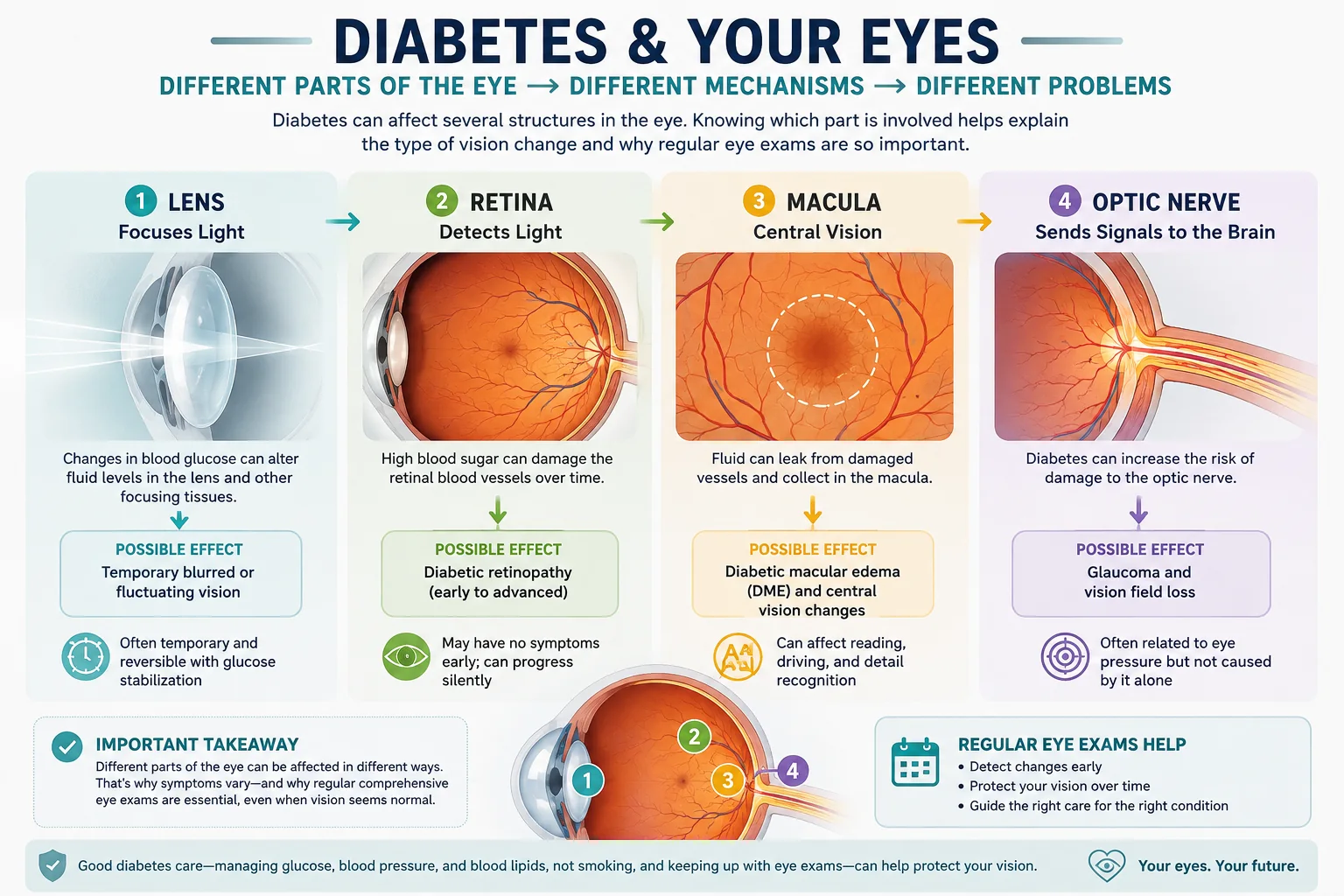
How Does Diabetes Affect Your Eyes?
Vision depends on several structures working together.
Light must be focused properly before reaching the retina. The retina detects light and converts it into signals, while the optic nerve carries visual information toward the brain.
Diabetes can affect different parts of this system through different mechanisms.
Changes in blood glucose may temporarily affect focusing. Longer-term diabetes-related complications can involve the retina and its blood vessels, while diabetes is also associated with a higher risk of other eye conditions.
Different Parts of the Eye Have Different Jobs
- The lens helps focus light.
- The retina is the light-sensitive tissue at the back of the eye.
- The macula is a specialized area of the retina responsible for detailed central vision.
- Retinal blood vessels help supply and support retinal tissue.
- The optic nerve carries visual information from the retina toward the brain.
Short-Term Vision Changes and Long-Term Eye Disease Are Different
Not every vision change in someone with diabetes means permanent eye damage.
Changes in blood glucose can sometimes temporarily affect focusing and cause blurred vision. Longer-term diabetic eye disease involves different processes and may develop gradually.
Blurred vision does not automatically mean diabetic retinopathy.
Can High Blood Sugar Cause Blurry Vision?
Changes in blood glucose can be associated with blurred or fluctuating vision.
The eye depends on precise optical conditions to focus light clearly. Changes in blood glucose can alter fluid levels in eye tissues involved in focusing, including the lens, temporarily changing how clearly the eye focuses light.
This is different from chronic damage associated with diabetic eye disease.
Why Vision Can Change When Glucose Levels Change
When focusing changes, vision may become temporarily blurry even without diabetic retinopathy.
That does not mean every episode of blurred vision in someone with diabetes is caused by glucose. Blurred vision has many possible causes, including conditions unrelated to diabetes.
Temporary Blurred Vision Is Not Diabetic Retinopathy
Blurred vision is a symptom.
Diabetic retinopathy is a specific diabetes-related disease affecting the retina.
Someone may experience blurred vision without having retinopathy. Conversely, early diabetic retinopathy can exist while vision still seems normal.
What Is Diabetic Eye Disease?
Diabetic eye disease is an umbrella term for several eye conditions associated with diabetes rather than one single disorder.
- diabetic retinopathy
- diabetic macular edema
- cataracts
- glaucoma
Retinopathy primarily involves the retina and its blood vessels. Diabetic macular edema involves swelling in the macula. Cataracts involve the lens. Glaucoma involves damage to the optic nerve.
What Is Diabetic Retinopathy?
Diabetic retinopathy is a diabetes-related disease that affects the retina and its blood vessels.
The retina is a thin layer of light-sensitive tissue at the back of the eye. It depends on a network of very small blood vessels to support normal retinal function.
Over time, diabetes can contribute to changes in this neurovascular tissue and its circulation. These changes can range from early abnormalities that do not noticeably affect vision to more advanced disease that can threaten sight.
The Retina Depends on Small Blood Vessels
Because the retina contains a dense network of small vessels, diabetic retinopathy belongs to the microvascular side of diabetes complications.
As retinopathy progresses, abnormalities can include vascular leakage, areas of reduced retinal blood supply and, in advanced disease, abnormal new blood vessel growth.
Early Diabetic Retinopathy May Not Cause Noticeable Symptoms
Early retinal changes can develop before a person notices anything unusual about their vision.
Even more significant retinopathy can sometimes be present without obvious symptoms, which is one reason screening is important.
Vision Can Change as Retinopathy Progresses
More advanced retinal disease can affect vision in different ways.
Blurred vision, floaters, dark areas and other visual changes can occur, depending on what is happening in the retina.
These symptoms are not unique to diabetic retinopathy and should not be used to diagnose it without an eye examination.
What Is Diabetic Macular Edema?
The macula is a specialized area near the center of the retina that is essential for detailed central vision.
Diabetic macular edema (DME) occurs when fluid leaking from damaged retinal blood vessels accumulates in the macula and causes swelling.
Why the Macula Matters for Central Vision
Central vision allows us to see fine detail needed for tasks such as reading and recognizing faces.
DME and Diabetic Retinopathy Are Related but Not Identical
DME can develop as a complication of diabetic retinopathy, but the terms describe different findings.
Diabetic retinopathy refers to diabetes-related disease affecting the retina and its vascular system.
Diabetic macular edema specifically describes fluid accumulation and swelling involving the macula.
Does Diabetes Increase the Risk of Cataracts?
Diabetes is associated with a higher risk of cataracts and with developing them at a younger age.
Cataracts Involve the Lens, Not the Retina
The lens is normally transparent and helps focus light inside the eye.
A cataract develops when the lens becomes cloudy. As the clouding progresses, vision may become blurry or hazy, and glare or difficulty seeing under certain lighting conditions may occur.
Cataracts are also common with aging and can occur for reasons unrelated to diabetes.
Does Diabetes Increase the Risk of Glaucoma?
Diabetes is also associated with an increased risk of glaucoma, including open-angle glaucoma.
Glaucoma Primarily Involves the Optic Nerve
The optic nerve carries visual information from the retina toward the brain.
Glaucoma describes a group of diseases characterized by progressive damage to this nerve.
Intraocular pressure is an important risk factor for common forms of glaucoma, but glaucoma should not be reduced simply to “high eye pressure.”
Glaucoma and Diabetic Retinopathy Are Different Conditions
What Eye Symptoms Can Occur in People With Diabetes?
Possible changes include:
- blurred or fluctuating vision
- new floaters
- dark or empty areas in the visual field
- difficulty seeing clearly
- other unexplained changes in vision
Symptoms Cannot Tell You Which Eye Condition Is Present
Blurred vision might involve temporary focusing changes, cataract, retinal disease or another problem entirely.
Vision changes tell us something has changed. An eye examination helps determine why.
Can Diabetic Eye Disease Develop Without Symptoms?
Yes. Some diabetes-related eye changes can develop before a person notices a meaningful difference in vision.
Early diabetic retinopathy is a particularly important example.
That is the reason screening remains important even when eyesight seems normal.
Why Are Regular Eye Exams Important in Diabetes?
A comprehensive dilated eye examination allows an eye-care professional to examine structures at the back of the eye, including the retina.
Screening Can Detect Changes Before Vision Is Affected
Because diabetic retinopathy can begin without noticeable symptoms, retinal examination can identify disease before a person realizes that something has changed.
- Adults with type 1 diabetes: an initial comprehensive dilated eye examination is generally recommended within 5 years after diabetes begins.
- People with type 2 diabetes: an initial comprehensive dilated eye examination is recommended at the time of diagnosis.
Follow-Up Depends on Retinal Findings and Individual Risk
When one or more annual eye examinations show no retinopathy and glycemic indicators are within the goal range, screening every one to two years may be considered. If retinopathy is present, examinations are generally needed at least annually and may be required more frequently when disease is progressing or threatening vision.
Pregnancy can also alter recommended eye-monitoring schedules in people with preexisting type 1 or type 2 diabetes.
What Can Help Protect Eye Health With Diabetes?
Eye health is not protected by one food, supplement or quick fix.
Glucose Management Is Important, but It Isn't the Whole Picture
Current diabetes guidance emphasizes management of glycemia, blood pressure and blood lipids as part of reducing the risk or slowing the progression of diabetic retinopathy.
Smoking, overall cardiovascular health, regular eye examinations and appropriate follow-up also matter.
Early Detection Helps Match Care to the Actual Condition
A cataract is not managed like diabetic retinopathy. Glaucoma is different from diabetic macular edema.
When Should Vision Changes Be Evaluated?
New, persistent or worsening changes in vision deserve appropriate evaluation.
New or Persistent Changes Deserve Attention
Persistent blurred vision, new floaters or other unexplained visual disturbances should not automatically be attributed to blood glucose.
Some Sudden Vision Changes Require Urgent Evaluation
The Bigger Picture: Different Parts of the Eye, Different Mechanisms
Retinal vascular changes → retina → diabetic retinopathy
Fluid accumulation → macula → diabetic macular edema
Lens clouding → lens → cataract
Optic nerve damage → optic nerve → glaucoma
That is why “diabetes affects the eyes” describes several different biological and clinical pathways rather than one single condition.
Understanding those differences makes symptoms easier to put into context and also explains why regular eye care matters even when vision seems normal.
Sources & Medical References
- American Diabetes Association — Standards of Care in Diabetes—2026: Retinopathy, Neuropathy, and Foot Care
- NIDDK — Diabetic Eye Disease
- National Eye Institute — Diabetic Retinopathy
- National Eye Institute — Retinal Detachment
Published: September 1, 2026 · Last reviewed: September 1, 2026