The stomach does more than hold food after a meal. Coordinated muscle activity gradually moves stomach contents into the small intestine, where digestion and nutrient absorption continue.
This process is called gastric emptying.
Diabetes can sometimes affect how this process works. In some people, the stomach empties more slowly than expected.
Gastroparesis is a clinical disorder in which measurable delayed gastric emptying is associated with upper gastrointestinal symptoms, without a mechanical obstruction explaining the delay.
Diabetes is an important known cause of gastroparesis, but most people with diabetes do not develop it. And having nausea, bloating or fullness after eating does not mean someone has gastroparesis.
There is also a two-way relationship worth understanding: blood glucose can affect stomach emptying, while stomach emptying can influence the timing of glucose after meals.
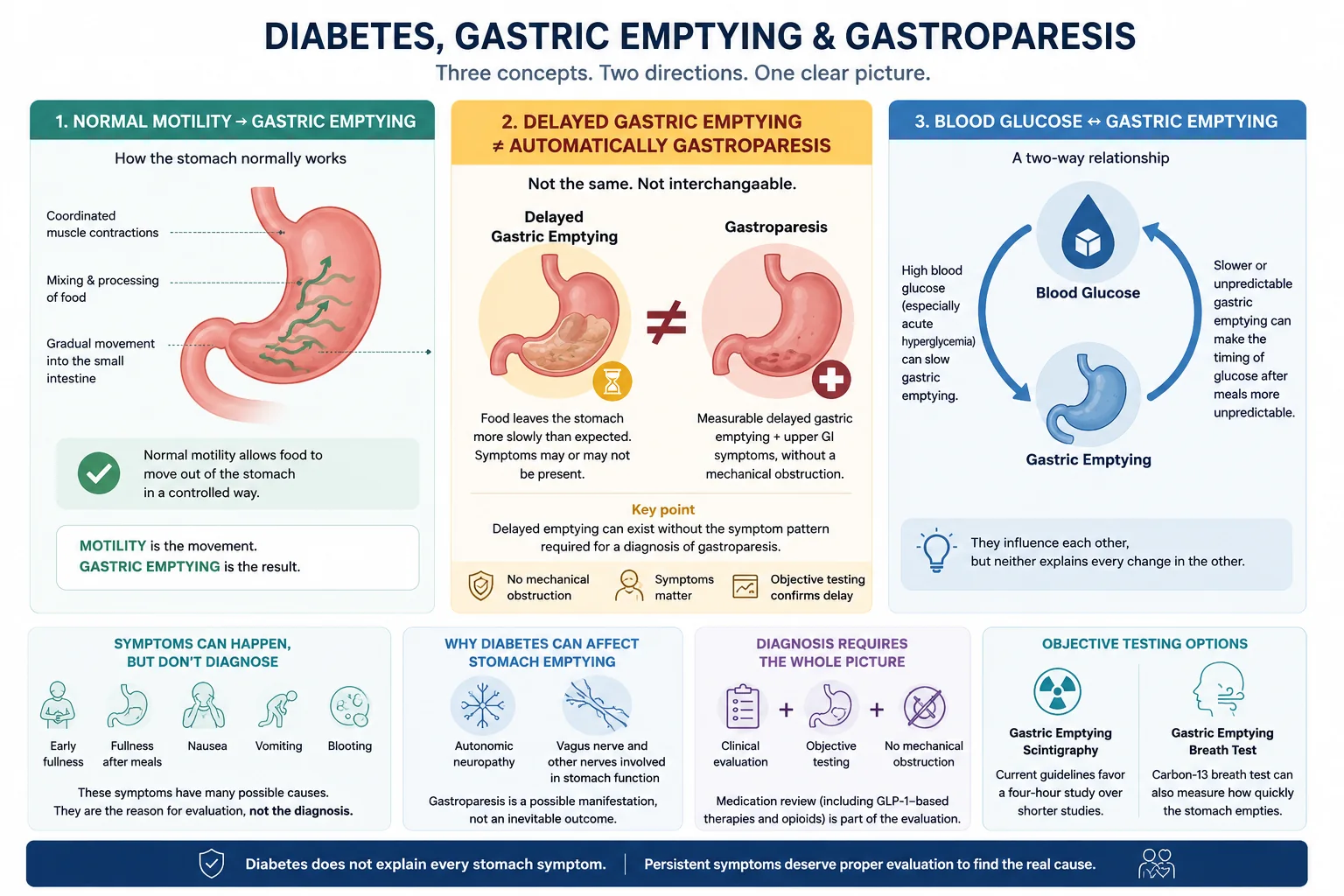
How Does the Stomach Normally Empty Food?
After food enters the stomach, coordinated contractions help mix and process it before gradually moving it into the small intestine.
What Is Gastric Motility?
Gastric motility refers to the coordinated muscular activity involved in moving and processing stomach contents.
Nerves, muscles and other specialized cells work together to control this movement.
What Is Gastric Emptying?
Gastric emptying describes the movement of stomach contents into the small intestine over time.
Motility and emptying are closely related, but they are not identical. Motility describes the movement and muscular activity of the stomach; gastric emptying describes how its contents leave the stomach.
What Does Delayed Gastric Emptying Mean?
Delayed gastric emptying means stomach contents are moving into the small intestine more slowly than expected.
Food may remain in the stomach longer, which can affect sensations after eating and change when nutrients reach the intestine.
But delayed emptying alone does not tell us why it is happening or how significant it is for a particular person.
Delayed Gastric Emptying Is Not Automatically Gastroparesis
People with diabetes can have objectively delayed gastric emptying without the symptom pattern expected in clinically significant gastroparesis.
A gastroparesis diagnosis therefore involves more than simply finding that the stomach empties slowly. Symptoms, objective evidence of delayed emptying and the absence of a mechanical obstruction all matter.
Slow Emptying Is Not the Same as a Blockage
A physical blockage can also interfere with food leaving the stomach, but that is a different problem.
By definition, gastroparesis occurs without a mechanical obstruction explaining the delay.
What Is Gastroparesis?
Gastroparesis is a clinical disorder in which measurable delayed gastric emptying is associated with upper gastrointestinal symptoms, without a mechanical obstruction explaining the delay.
Diabetes Is One Possible Cause
Diabetes is the most common known underlying cause of gastroparesis, but it is not the only one.
Some cases are idiopathic, meaning no underlying cause is identified. Surgery affecting digestive nerve pathways and other medical conditions can also be associated with gastroparesis.
Gastroparesis Is Not Inevitable in Diabetes
Having diabetes does not mean that gastroparesis will develop.
Likewise, stomach symptoms in someone with diabetes should not automatically be attributed to diabetic gastroparesis.
What Symptoms Can Gastroparesis Cause?
Symptoms vary from person to person.
Early Satiety and Fullness After Meals
Early satiety means feeling full sooner than expected while eating, sometimes after only a small amount of food.
Postprandial fullness refers to a feeling of fullness after eating that may persist longer than expected.
Nausea, Vomiting and Bloating
Gastroparesis can also cause nausea, vomiting and bloating.
These symptoms are not unique to gastroparesis, however. Their presence alone cannot establish the diagnosis.
How Are Blood Glucose and Stomach Emptying Connected?
The relationship works in both directions.
Blood Glucose Can Affect Gastric Emptying
Blood glucose can influence stomach function. In particular, acute hyperglycemia can slow gastric emptying.
That does not mean a single episode of high blood glucose causes gastroparesis. The longer-term relationship between diabetes and gastric function is more complex.
Gastric Emptying Can Affect Glucose After Meals
The stomach helps determine when nutrients reach the small intestine for absorption.
When gastric emptying is delayed or unpredictable, the timing of nutrient absorption may also become less predictable. For someone with diabetes, that can make post-meal glucose patterns more difficult to anticipate.
Why Can Diabetes Affect Stomach Emptying?
Normal gastric emptying depends on coordinated neuromuscular function.
The Vagus Nerve Is Part of the System
The vagus nerve helps carry signals involved in coordinating stomach movement.
Diabetes-related changes can affect autonomic nerves, including the vagus nerve, as well as other parts of the stomach's neuromuscular system.
Gastroparesis should therefore not be reduced to “vagus nerve damage.”
Autonomic Neuropathy Can Be Part of the Picture
Diabetic autonomic neuropathy can affect body functions that are normally regulated without conscious control, including digestive function.
Gastroparesis is one recognized gastrointestinal manifestation of diabetic autonomic neuropathy, but not everyone with autonomic neuropathy develops gastroparesis.
Autonomic nerve dysfunction can also affect other organ systems. For a closer look at urinary function, see our guide to diabetes and bladder function.
How Is Gastroparesis Diagnosed?
Symptoms are the beginning of the evaluation, not the diagnosis itself.
A clinician may consider the pattern of symptoms, medical history, medications, diabetes history, previous surgery and other possible explanations.
Other Causes Need to Be Considered
Some medications can alter gastric emptying or produce similar digestive symptoms. Medication history is therefore part of the evaluation, including the use of GLP-1–based therapies and opioids.
This does not mean those medications automatically cause gastroparesis.
Other conditions, including mechanical obstruction, may also need to be excluded before symptoms are attributed to gastroparesis.
Objective Gastric-Emptying Testing Matters
When gastroparesis is suspected, objective testing can determine whether the stomach is actually emptying more slowly than expected.
That helps separate symptoms that resemble gastroparesis from documented delayed gastric emptying.
What Tests Measure Gastric Emptying?
Two established approaches can provide objective information about gastric emptying.
Gastric Emptying Scintigraphy
Gastric emptying scintigraphy measures how quickly a standardized test meal leaves the stomach.
For suspected gastroparesis, current guidelines favor a four-hour gastric emptying study rather than a shorter two-hour study.
The result is interpreted within the broader clinical evaluation rather than as a stand-alone diagnosis.
Gastric Emptying Breath Testing
A validated carbon-13 gastric emptying breath test can also be used to assess gastric emptying.
The testing method is different, but the clinical purpose is similar: obtaining objective information about how quickly the stomach empties.
Test results require clinical interpretation because medications, glucose status and other factors can influence gastric function.
How Is Gastroparesis Managed?
Management depends on symptoms, nutritional needs, glucose management, underlying causes and the severity of the condition.
Nutrition May Need to Be Individualized
Changes in meal size, composition or food consistency may be helpful for some people with diagnosed gastroparesis.
More significant symptoms can require individualized nutritional support to maintain adequate calories, nutrients and hydration.
Diabetes Management May Become More Complex
Delayed or unpredictable nutrient absorption can make glucose management more difficult.
Changes to insulin or other glucose-lowering medications should be individualized with an appropriate healthcare professional.
Treatment Is Individualized
Medications and other interventions may be considered when appropriate.
The choice depends on the diagnosis, symptom severity, nutritional status, risks and response to previous treatment rather than on digestive symptoms alone.
When Should Digestive Symptoms Be Discussed With a Healthcare Professional?
Occasional fullness or digestive discomfort is common and does not by itself suggest gastroparesis.
Persistent symptoms deserve more attention, especially when they interfere with eating, hydration or diabetes management.
Repeated vomiting, difficulty maintaining fluids or nutrition, unintended weight loss, fainting or severe persistent symptoms may require more prompt medical evaluation.
Most importantly, diabetes does not explain every stomach symptom. Persistent digestive problems should be evaluated for their actual cause rather than automatically labeled diabetic gastroparesis.
The Bigger Picture: Glucose, Stomach Emptying and Gastroparesis
Gastric motility moves stomach contents toward the small intestine.
DELAYED GASTRIC EMPTYING
Food leaves the stomach more slowly than expected.
GASTROPARESIS
Delayed gastric emptying is associated with upper GI symptoms and no mechanical obstruction explains the delay.
These concepts are related, but they are not interchangeable.
There is also a separate two-way relationship: blood glucose can influence gastric emptying, while gastric emptying can influence the timing of nutrient absorption and glucose after meals.
Symptoms such as early fullness, prolonged fullness, nausea or vomiting can be reasons for evaluation, but they cannot diagnose gastroparesis on their own.
For people with diabetes, understanding these distinctions helps avoid both assuming that every stomach symptom is gastroparesis and overlooking persistent digestive symptoms that deserve proper evaluation.
Sources & Medical References
- American Diabetes Association — Standards of Care in Diabetes—2026: Retinopathy, Neuropathy and Foot Care
- American Gastroenterological Association — Clinical Practice Guideline on Management of Gastroparesis (2025)
- NIDDK — Gastroparesis
- NIDDK — How Does Gastroparesis Affect People With Diabetes?
Published: September 1, 2026 · Last reviewed: September 1, 2026