Enamel Erosion: Causes, Signs, and How to Protect Your Teeth
Repeated exposure to non-bacterial acids can affect tooth surfaces and contribute to dental erosion. Learn where these acids come from, what erosive tooth wear may look like, and how further exposure can be reduced.
Repeated exposure to non-bacterial acids can gradually affect the mineralized surfaces of teeth. This process is known as dental erosion and often begins at the enamel surface.
Enamel erosion is commonly discussed within the broader concept of dental erosion, which can contribute to erosive tooth wear. The acids involved may come from foods and drinks or from inside the body, such as stomach acid reaching the mouth.
Understanding where these acids come from — and how often and how long the teeth are exposed to them — can help explain why erosion develops and how further tooth structure loss may be reduced.
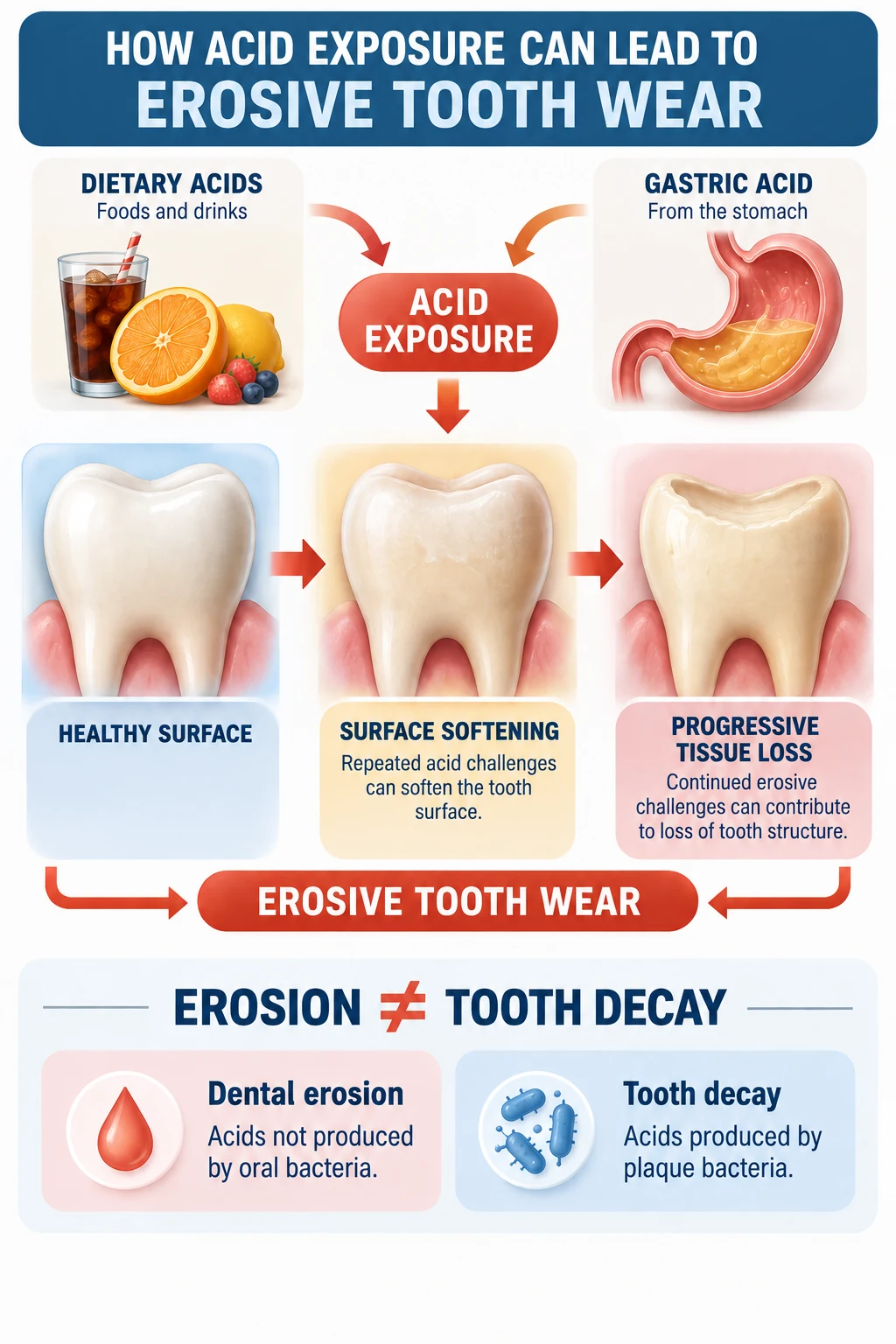
What Is Enamel Erosion?
Dental erosion is a chemical process in which acids not produced by oral bacteria act on mineralized tooth tissue.
This distinction matters because not every form of tooth wear or mineral loss is erosion. Dental erosion may contribute to a broader pattern of tooth wear, which can involve more than one process.
How Acid Exposure Affects Tooth Enamel
An erosive acid challenge can dissolve minerals at the tooth surface and temporarily soften enamel.
Saliva provides natural protection by helping dilute, clear and buffer acids. When acid challenges are repeated or prolonged, however, the tooth surface may face more frequent periods of erosive stress.
With continued exposure, this can contribute to progressive loss of mineralized tooth structure.
How Acid Exposure Can Lead to Erosive Tooth Wear
Repeated erosive challenges can soften tooth surfaces and contribute to progressive erosive tooth wear.
This does not mean that every contact with something acidic results in established erosion. The pattern and frequency of exposure, the time acids remain in contact with the teeth and other conditions in the mouth can influence the overall erosive challenge.
Tooth wear may also involve more than one process, which is why worn-looking teeth do not automatically establish erosion as the cause.
What Causes Enamel Erosion?
The acids involved in dental erosion are generally described as extrinsic or intrinsic.
Extrinsic acids come from outside the body, most commonly through foods and drinks. Intrinsic acids originate inside the body, particularly when gastric contents reach the mouth.
In some people, more than one source of acid exposure may contribute.
Dietary Acids: Drinks, Foods, and Frequent Acid Exposure
Acidic beverages are an important dietary source of erosive exposure. Soft drinks, sports drinks and some fruit juices are common examples.
Certain acidic foods and snacks may also contribute.
However, an acidic food or drink should not automatically be treated as damaging every time it is consumed. Frequency, drinking or eating habits and the length of contact with the teeth can influence the erosive challenge.
The properties of the food or beverage also matter. Its pH is relevant, but pH alone does not determine its erosive potential.
Stomach Acid, Reflux, and Recurrent Vomiting
Acid exposure can also originate from the stomach.
Gastric contents may reach the mouth during gastroesophageal reflux or recurrent vomiting. When this happens repeatedly, gastric acid can contribute to dental erosion.
The presence of erosion does not establish that a person has reflux or another medical condition. A dentist considers the pattern of tooth wear together with dental and health history when investigating possible sources of acid exposure.
Why Frequency and Contact Time Matter
Erosion risk is not determined simply by whether something acidic touches the teeth.
Frequent sipping of acidic beverages, holding them in the mouth or other habits that extend contact with tooth surfaces can increase the erosive challenge.
Saliva helps dilute, clear and buffer acids. Frequent or prolonged acid exposure can increase the erosive challenge to tooth surfaces.
For this reason, the pattern of exposure can be important when evaluating possible contributors to dental erosion.
What Does Enamel Erosion Look and Feel Like?
Dental erosion does not always produce obvious symptoms in its early stages.
As erosive tooth wear progresses, changes may develop in the texture, contour or appearance of affected teeth. More advanced tissue loss may expose underlying dentin and contribute to sensitivity.
Because similar changes can have other causes, appearance or sensitivity alone cannot confirm dental erosion.
Changes in Tooth Shape, Texture, and Appearance
Erosive tooth wear can gradually alter the normal surface characteristics of teeth.
Possible clinical findings include loss of normal surface texture, smoother or flattened areas and shallow defects. Some surfaces may appear unusually smooth or glossy, while chewing surfaces can develop areas of cupping or flattening.
These findings need to be considered as part of the overall pattern of tooth wear rather than used individually to diagnose erosion.
Tooth Sensitivity and Other Signs of Progressive Erosion
Sensitivity may occur as erosion progresses, particularly when tissue loss exposes dentin.
A person may notice increased sensitivity to temperature or other stimuli. However, tooth sensitivity has many possible causes and is not specific to dental erosion.
It should therefore be viewed as a possible consequence or warning sign rather than a way to diagnose erosion at home.
Enamel Erosion vs Tooth Decay: What’s the Difference?
Enamel erosion and tooth decay can both involve mineral loss, but they are different processes.
Dental erosion involves acids that do not originate from oral bacteria. Tooth decay, or dental caries, involves acids produced when bacteria in dental plaque metabolize fermentable carbohydrates.
The two processes can occur in the same mouth, but they should not be used as synonyms.
Non-Bacterial Acids vs Acids Produced by Oral Bacteria
With dental erosion, acids may come directly from foods and drinks or from gastric contents reaching the mouth.
With tooth decay, acids are produced within dental plaque as bacteria metabolize fermentable carbohydrates.
The source of the acid is therefore an important distinction between the two processes.
Can Enamel Erosion Be Reversed?
Once erosive tooth wear has resulted in physical loss of tooth structure, that lost structure does not naturally grow back.
This does not mean that nothing can be done. Identifying and reducing repeated erosive challenges can help limit further progression.
Depending on the extent and pattern of tissue loss, a dentist may recommend appropriate preventive or restorative management.
Why Preventing Further Tissue Loss Matters
When erosive challenges continue, additional tooth structure may be lost over time.
Early recognition therefore matters because attention can be directed toward the factors contributing to erosion before further loss occurs.
The appropriate approach depends on the source and pattern of acid exposure as well as the extent of existing tooth wear.
How Can You Help Protect Your Teeth From Enamel Erosion?
Reducing repeated and prolonged contact between teeth and erosive acids is an important strategy for limiting further erosion.
This does not mean eliminating every acidic food from the diet. Instead, attention can be given to how often erosive exposures occur and to habits that keep acids in contact with tooth surfaces for longer periods.
Reduce Repeated Acid Exposure
Limiting frequent consumption of acidic beverages and avoiding habits such as holding or swishing acidic drinks around the teeth can reduce repeated erosive challenges.
Rinsing the mouth with water after acidic foods or beverages can help clear acids from the mouth.
If recurrent vomiting or reflux is contributing to acid exposure, the underlying source should not be treated as merely a dental hygiene issue.
Reduce the Time Teeth Spend in Contact With Acids
Repeated sipping over an extended period or holding an acidic beverage in the mouth can prolong contact between acids and tooth surfaces.
Reducing these behaviors can help limit the duration of the acid challenge.
The goal is not to create rigid rules around every acidic exposure, but to reduce patterns that repeatedly or unnecessarily prolong acid contact with the teeth.
When Should You See a Dentist?
Consider a dental evaluation if you notice persistent changes in the shape, texture or appearance of your teeth, unexplained sensitivity, or signs that tooth surfaces may be wearing away.
Early dental erosion can be difficult to recognize without a clinical examination. A dentist can evaluate the pattern of tooth wear, review possible dietary and health-related sources of acid exposure, and determine whether erosion or another process may be involved.
If repeated gastric acid exposure is suspected, a dentist may also recommend appropriate medical evaluation.
Identifying what may be driving the erosion can help guide steps aimed at reducing further loss of tooth structure.
Sources
- American Dental Association. Dental Erosion.
- American Dental Association. Nutrition and Oral Health.
- National Institute of Dental and Craniofacial Research. Tooth Decay.
- UK Government. Delivering Better Oral Health: Chapter 7 — Tooth Wear.