Women's Midlife Health: Understanding Changes in Your 40s and Beyond
Midlife can bring noticeable changes in how a woman feels, sleeps, moves, thinks, and experiences her overall health. Some of these changes may be related to hormonal and reproductive transitions, while others are more closely connected to aging, lifestyle, stress, medications, or existing health conditions.
That is why midlife should not be treated as a diagnosis. It is a stage of life in which different influences can overlap, making it important to understand what has changed, what may be contributing, and when a new symptom deserves closer attention.
This guide provides an overview of women's midlife health and the main areas that may become more relevant during the 40s and beyond. It is designed to help readers understand the broader context without assuming that every change is caused by menopause.
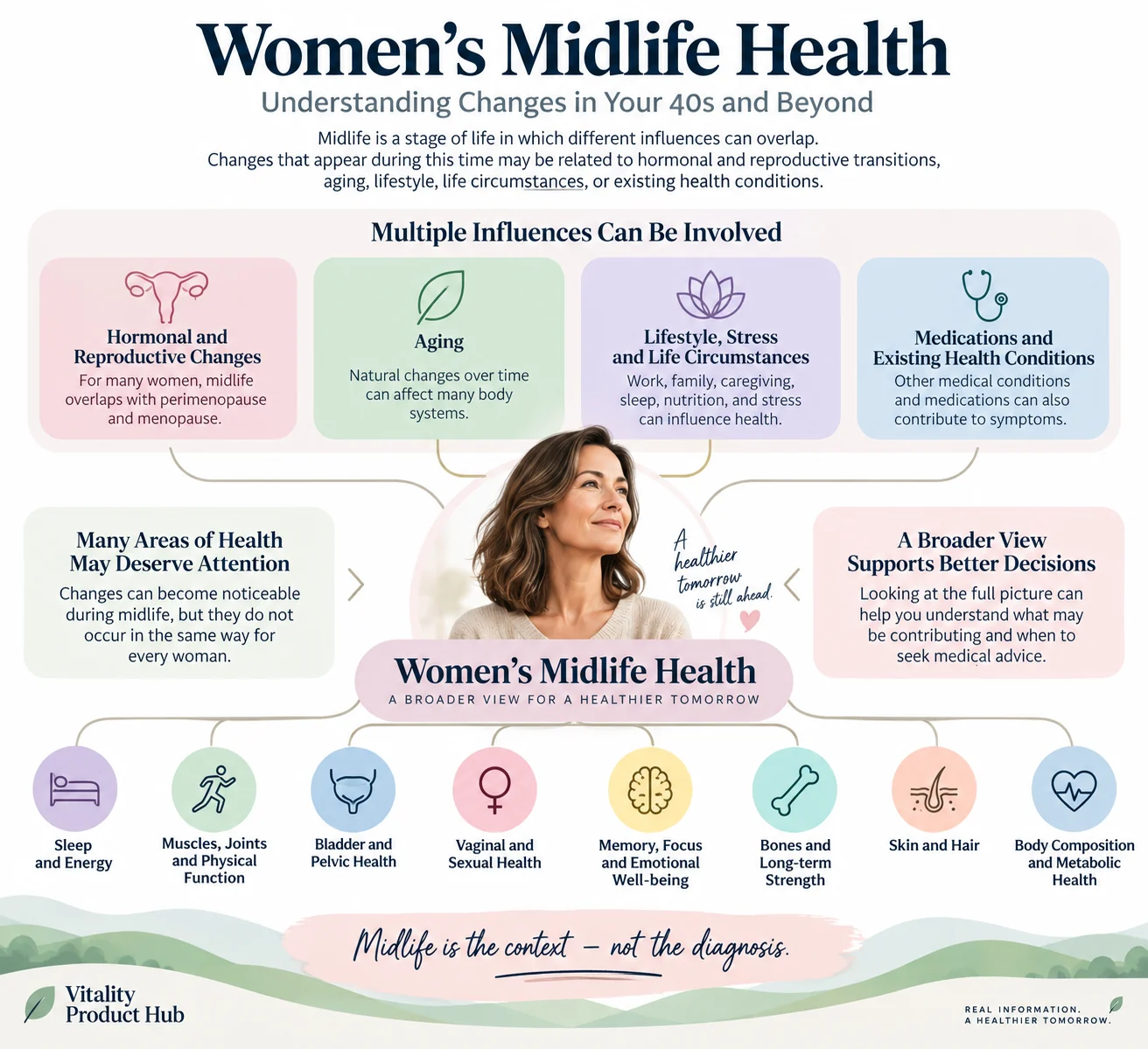
What Does Midlife Mean for Women's Health?
Midlife is not defined by a single birthday or one biological event. For many women, it overlaps with reproductive transitions such as perimenopause and menopause, but it also includes changes related to aging, life circumstances, and long-term health.
This period can become an important time to notice patterns in sleep, physical function, bladder and pelvic health, cognitive changes, bone health, body composition, and other areas that may evolve over time.
Midlife Is a Life Stage, Not a Diagnosis
Experiencing a new change during midlife does not automatically mean that menopause, aging, or any one condition is responsible.
Similar symptoms can have different explanations, and the same health issue may affect two women very differently. Hormonal changes may contribute in some cases, while medications, stress, sleep disruption, metabolic factors, or other health conditions may play a larger role in others.
For that reason, understanding a health change during midlife often means considering the broader context rather than assigning it to a single cause.
Why Health Can Change During Midlife
Health changes during midlife rarely have a single explanation. This stage can bring together reproductive transitions, gradual changes associated with aging, shifts in daily routines and responsibilities, and health conditions that may have developed earlier in life.
These influences can overlap. A change that appears during the 40s or 50s may coincide with perimenopause or menopause without necessarily being caused by hormonal changes alone. Looking at the broader picture can provide a more useful understanding of what may be contributing.
Hormonal and Reproductive Transitions
For many women, midlife overlaps with perimenopause, the transition leading up to menopause. During this time, ovarian function and hormone patterns change, and menstrual cycles may become less predictable before periods eventually stop.
These reproductive changes can influence different aspects of health, but their effects vary considerably from one woman to another. Hormonal transition is therefore an important part of the midlife picture rather than an explanation for every change that occurs during it.
Aging and Changes Across the Body
Midlife also occurs within the broader process of aging. Over time, changes can occur in muscle mass and strength, bone health, body composition, cardiovascular and metabolic health, and other body systems.
Some of these changes may occur alongside reproductive aging, which can make their influences difficult to separate. Age, reproductive stage, health history, and other factors may all contribute to the broader picture.
Lifestyle, Stress, Sleep and Life Circumstances
Daily life can change substantially during midlife. Work demands, caregiving responsibilities, physical activity, nutrition, stress, and sleep patterns can all influence how a woman feels and functions.
These factors may also interact with hormonal or age-related changes. For example, poor sleep can affect daytime energy and concentration, while stress may influence both sleep and overall well-being.
Medications and Existing Health Conditions
New symptoms should not automatically be attributed to midlife itself. Medications, existing medical conditions, and changes in health over time can sometimes contribute to symptoms that overlap with those commonly discussed during this stage of life.
This is one reason persistent, worsening, unusual, or concerning changes may deserve individual medical evaluation rather than being dismissed as simply “part of getting older.”
Areas of Health That Can Change During Midlife
Changes may become noticeable across many areas of health during midlife, but they do not occur in the same way for every woman. Different influences may contribute, including reproductive transitions, aging, lifestyle, existing health conditions, medications, or combinations of these factors.
The areas below are not a checklist of what every woman should expect. They are parts of health that may deserve greater attention during this stage of life.
Sleep and energy. Changes in sleep patterns, nighttime waking, and daytime energy can become more noticeable during midlife. Because sleep can be influenced by many factors, persistent changes are best considered within their broader context.
Muscles, joints and physical function. Strength, mobility, joint comfort, and physical function may change over time. Midlife can be an important period for noticing changes that affect movement or everyday activities.
Bladder and pelvic health. Some women notice changes involving urinary frequency, urgency, leakage, or pelvic comfort during midlife. These symptoms can have different causes and should not automatically be considered a normal consequence of aging.
Vaginal and sexual health. Vaginal comfort, lubrication, sexual function, and related symptoms may change during this stage of life. Hormonal changes can play a role for some women, but individual experiences and causes vary.
Memory, focus and emotional well-being. Changes in concentration, memory, mood, or mental clarity may be noticed during midlife. Sleep, stress, medications, hormonal transitions, and other health factors may all contribute.
Bones and long-term strength. Bone health becomes increasingly important with age, and hormonal changes around menopause can also affect bone health. Supporting long-term skeletal health is therefore an important part of women's health during midlife.
Skin and hair. Skin texture, dryness, and hair changes may become more noticeable during midlife. Aging, hormones, health conditions, medications, and environmental or lifestyle factors can all influence these changes.
Body composition and metabolic health. Changes in body composition, fat distribution, muscle mass, and metabolic health can occur during midlife. These changes are influenced by more than reproductive hormones alone and are best understood within the broader context of aging and overall health.
Menopause Is Part of Midlife — But Not the Whole Story
For many women, midlife includes the transition through perimenopause and menopause. Changes in ovarian function and hormone patterns during this transition can influence health and may contribute to symptoms or changes that become noticeable during these years.
But menopause is only one part of the midlife health picture.
A woman may experience changes during the same period that are influenced by aging, sleep, stress, lifestyle, medications, existing health conditions, or other factors. Some of these influences may also overlap, making it difficult to assign a new symptom to a single cause based on timing alone.
This distinction matters because a symptom appearing during perimenopause or after menopause should not automatically be assumed to be hormonal. Understanding the broader context can help women recognize when a change may be related to a reproductive transition and when other possible explanations may deserve consideration.
Menopause therefore belongs within women's midlife health — without defining all of it.
Midlife Is Also a Window for Prevention
Midlife is not only a time to pay attention to new symptoms or changes. It can also be an important period for looking ahead and considering the factors that support health and function over the years to come.
Some health risks change with age, while others are influenced by family history, reproductive history, lifestyle, existing medical conditions, and individual circumstances. This makes prevention during midlife less about following a single checklist and more about understanding personal risk and staying engaged with appropriate health care.
Health Risks Can Change With Age and Life Stage
As women move through midlife, the relative importance of certain health risks may change. Cardiovascular, bone, metabolic, and other aspects of long-term health can become increasingly relevant, while reproductive and hormonal transitions may add another layer to the overall picture.
These changes do not mean that a particular condition is inevitable. Instead, midlife provides an opportunity to consider how age, reproductive stage, health history, and other risk factors may interact over time.
Screening and Preventive Care Are Individual
Preventive care is not identical for every woman of the same age. Which screenings, assessments, or preventive measures are appropriate can depend on factors such as personal and family history, previous results, medications, health conditions, and individual risk.
Rather than assuming that reaching a particular birthday automatically requires the same set of tests for everyone, women can discuss appropriate preventive care with their health care professionals based on their individual circumstances and current guidance.
When a New Change Deserves Medical Attention
Many changes that appear during midlife have more than one possible explanation. While some may occur alongside aging or reproductive transitions, a new symptom should not automatically be dismissed as “just getting older” or assumed to be menopause.
A change may deserve medical attention when it is persistent, worsening, severe, unusual for you, or interfering with daily life. Some sudden or severe symptoms can require urgent medical attention, depending on the symptom and circumstances.
This does not mean that every new change signals a medical condition. Timing alone cannot determine the cause. A health care professional can consider the symptom together with medical history, medications, risk factors, and other relevant information when deciding whether further evaluation is appropriate.
Paying attention to changes — without assuming either that something is wrong or that the change is simply part of midlife — can help women make more informed decisions about when to seek care.
Explore Women's Midlife Health
Midlife can affect different areas of health in different ways. These guides explore specific changes and questions in more detail.
Waking Up at Night During Midlife
Learn why nighttime waking can become more noticeable during midlife and how hormonal changes, aging, stress, physical discomfort and other factors may contribute.
Explore Waking Up at Night During Midlife →
Joint Pain During Midlife
Learn why joint aches and stiffness may become more noticeable during midlife and how the menopausal transition, aging, joint conditions and other factors may contribute.
Explore Joint Pain During Midlife →
Brain Fog and Forgetfulness During Midlife
Learn why brain fog, forgetfulness and trouble concentrating may become more noticeable during midlife and what factors may contribute.
Explore Brain Fog and Forgetfulness During Midlife →
Migraine During the Menopausal Transition
Learn why an established migraine pattern may change during perimenopause, including possible changes in frequency, severity and predictability and factors that may contribute.
Explore Migraine During the Menopausal Transition →
Vaginal Dryness During Perimenopause
Learn why vaginal dryness may become more noticeable during perimenopause, how estrogen-related changes may contribute and why other factors can matter.
Explore Vaginal Dryness During Perimenopause →
Weight Gain During Midlife
Learn why weight gain may become more noticeable during midlife and how aging, the menopausal transition, body composition and fat distribution may contribute to changes in weight and body shape.
Heart Palpitations During Midlife
Heart palpitations can feel like racing, pounding or fluttering. During midlife, hormonal changes may be part of the picture, but sleep, stress, stimulants, medications and health conditions may also matter.
Dry Eyes During Midlife
Dry, gritty or irritated eyes can become more noticeable during midlife. Hormonal changes during the menopausal transition may be part of the picture, while aging and other factors can also matter.
Dry Skin During Midlife
Dry skin can become more noticeable during midlife. Changes associated with the menopausal transition may be part of the picture, while aging, environment and other factors can also matter.
Bladder Leaks During Midlife
Bladder leaks may become more noticeable during midlife. Different patterns of urinary incontinence can occur, while aging, reproductive history, the menopausal transition and other factors may also be relevant.
Explore Bladder Leaks During Midlife →
Explore Hair Thinning and Hair Loss During Midlife
Explore Changes in Sexual Desire During Midlife
Explore Feeling More Anxious During Midlife
Explore Mood Changes During Midlife
Explore Itchy Skin During Midlife
Explore Bloating During Midlife
Explore Dry Mouth During Midlife
Explore Dizziness During Midlife
Explore Tinnitus During Midlife
Explore Body Odor Changes During Midlife
Explore Burning Sensation in the Mouth During Midlife
Explore Taste Changes During Midlife
Explore Gum Changes During Midlife
Explore Frequent Urination During Midlife
Explore Breast Pain During Midlife
Explore Period Changes During Midlife
Explore Hot Flashes During Midlife
Explore Constipation During Midlife