Hearing changes can be easy to miss when they happen slowly. Conversations may require more effort, familiar sounds may seem less clear, or the television may gradually need to be louder than before.
Changes like these can be signs of hearing difficulty, but age alone does not explain every hearing problem. Hearing loss can have different causes, and sudden or rapidly developing changes require prompt medical attention.
What Is Age-Related Hearing Loss?
Age-related hearing loss, also called presbycusis, is hearing loss that develops gradually as people grow older. It commonly affects both ears, and because the change may occur over years, some people do not immediately recognize how much their hearing has changed.
Why Presbycusis Usually Develops Gradually
Hearing depends on several parts of the auditory system working together. Sound is detected by structures in the ear and the resulting information travels along auditory pathways toward the brain.
Age-related changes can affect different parts of the auditory system. Presbycusis typically develops gradually rather than appearing as a single sudden event.
Why Age-Related Hearing Loss Often Affects Both Ears
Age-related hearing loss commonly affects both ears, although individual hearing patterns can vary.
A noticeable difference in hearing between the ears is a reason to seek professional evaluation rather than assuming the change is age-related.
Why Can Hearing Change as You Age?
There is no single explanation for every case of age-related hearing loss.
Changes within the auditory system can occur with age, while lifetime noise exposure, genetics, certain health conditions and some medications may also influence hearing.
Changes in the Inner Ear and Auditory Pathways
Changes in the inner ear can affect hearing as people age. Age-related changes may also occur in the middle ear and along the complex nerve pathways that carry auditory information from the ear toward the brain.
This is why presbycusis should not be reduced to the idea that a single part of the ear simply “wears out.”
How Noise Exposure, Health Conditions, and Genetics May Contribute
Hearing across a lifetime reflects more than age alone.
Long-term exposure to loud noise can contribute to hearing problems, and genetic differences may make some people more susceptible to hearing loss as they age. High blood pressure and diabetes have also been associated with hearing loss, while some medications can damage sensory cells involved in hearing.
These factors may contribute to a person's hearing history, but their presence alone does not establish the cause of an individual's hearing loss.
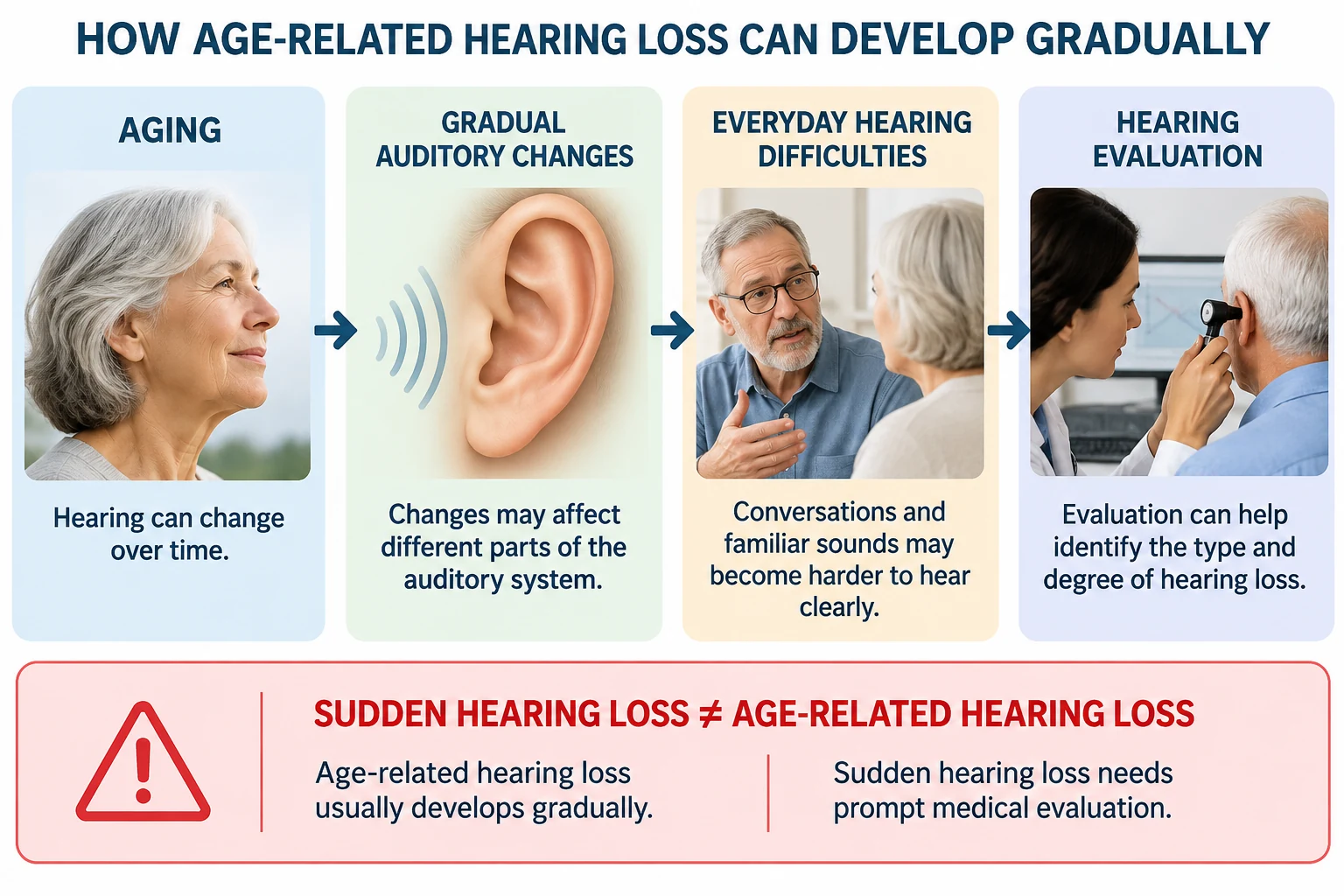
Age-related hearing loss usually develops gradually. Sudden hearing loss is a different situation and needs prompt medical evaluation.
What Are Common Signs of Age-Related Hearing Loss?
Because presbycusis tends to develop gradually, early clues may first appear during ordinary activities.
A person may begin asking others to repeat themselves more often, need a higher television or radio volume, or have greater difficulty following conversations.
These experiences can suggest hearing difficulty, but they cannot identify its cause.
Everyday Sounds and Conversations May Become Harder to Hear
Hearing changes can make communication require more effort. Voices may seem less clear, conversations involving several people may become harder to follow, and some everyday sounds may be easier to miss.
The important distinction is that these are signs of possible hearing difficulty, not a way to diagnose presbycusis at home.
Why Following Speech Can Become More Difficult
Background noise can make conversations especially difficult to follow for some people with age-related hearing loss.
However, difficulty understanding speech in noise is not specific to presbycusis and cannot establish the diagnosis on its own.
When Is Hearing Loss Not Just an Age-Related Change?
Being older does not mean that every hearing problem should automatically be attributed to aging.
Hearing difficulties can have multiple causes. Problems involving the outer or middle ear, noise exposure, certain medications, medical conditions and other factors may affect hearing.
Sudden or Rapid Hearing Loss Needs Prompt Medical Attention
Why New Hearing Difficulties Deserve Evaluation
New hearing difficulties deserve attention because age-related changes are only one possible explanation.
Evaluation can help distinguish hearing problems that may need medical attention from other forms of hearing loss. Causes such as earwax buildup, infection, injury and other medical problems can sometimes affect hearing.
How Is Age-Related Hearing Loss Evaluated?
A hearing evaluation looks beyond whether a person can simply detect sound.
Depending on the circumstances, evaluation may include a discussion of hearing concerns and medical history, examination of the ears and assessment of the ability to hear sounds and understand speech.
What a Hearing Evaluation Can Help Identify
Audiological evaluation can help determine the type and amount of hearing loss and assess how well a person hears and understands sounds.
Those findings can help determine whether further medical evaluation or hearing support may be appropriate.
Why the Cause and Degree of Hearing Loss Matter
Hearing loss does not have a single form.
It may be sensorineural, conductive or mixed, and the degree of loss can vary. Some problems affecting the outer or middle ear may have medically or surgically treatable causes, while other hearing difficulties may be managed differently.
Identifying the pattern of hearing loss therefore helps guide appropriate next steps.
What Can Help With Age-Related Hearing Loss?
There are ways to reduce the impact that hearing difficulty can have on communication and everyday activities.
The appropriate approach depends on the type and degree of hearing loss, communication needs and individual circumstances.
Hearing Aids and Other Assistive Options
Hearing aids can help some people hear sounds and communicate more effectively, but they do not restore normal hearing.
Selecting an appropriate option depends on factors such as the type and severity of hearing loss and a person's listening needs.
Communication Strategies for Everyday Situations
Simple changes to the listening environment can also make communication easier.
Reducing competing background noise, moving closer to the person speaking, making sure the speaker's face is visible and choosing quieter places for important conversations may help. Family members and friends can also speak clearly and face the listener when talking.
These strategies do not restore hearing, but they can make everyday communication easier.
Can Age-Related Hearing Loss Be Prevented?
Scientists do not yet know how to prevent age-related hearing loss itself.
That distinction matters because some hearing risks can be reduced — particularly hearing damage caused by excessive noise exposure.
Protecting Hearing From Harmful Noise Exposure
Loud sounds can damage hearing. Reducing exposure to harmful noise, limiting the amount of time spent around loud sound and using hearing protection when appropriate can help reduce the risk of noise-induced hearing loss.
Protecting hearing from excessive noise remains worthwhile as people age.
Why Noise Protection Is Not the Same as Preventing Presbycusis
Noise-induced hearing loss and age-related hearing loss can both contribute to hearing difficulty, but they are not the same condition.
Reducing harmful noise exposure can help protect against noise-induced hearing loss. It does not establish that presbycusis itself can be prevented.
When Should You Have Your Hearing Checked?
Persistent hearing difficulties that interfere with conversations or everyday activities are a reason to consider having hearing evaluated. Evaluation can help clarify the type and amount of hearing loss and whether further medical care or hearing support may be appropriate.
Some changes deserve more urgent attention. Sudden hearing loss requires immediate medical evaluation. Ear pain or drainage, severe dizziness or vertigo, or a noticeable difference in hearing between the ears are also reasons to seek professional medical evaluation.
Age-related hearing loss often develops slowly, but its effects on communication can become meaningful. Recognizing changes and having hearing evaluated can help clarify what is happening and what options may be appropriate.
Sources
Vitality Product Hub prioritizes government and primary health-information sources for medical and hearing-health content.